








Before we leave this topic I want to point out that not all chokes occur at the neck.Of course squeezing the windpipe is the most common form of choking, but you can also impair breathing by applying pressure to the torso.
The diaphragm is a powerful sheet of muscle that lies between your heart and lungs in the upper part of your torso, and your stomach, intestines and other organs in the lower part of your torso.The diaphragm is the primary muscle responsible for moving air in and out of the body by inflating your lungs.
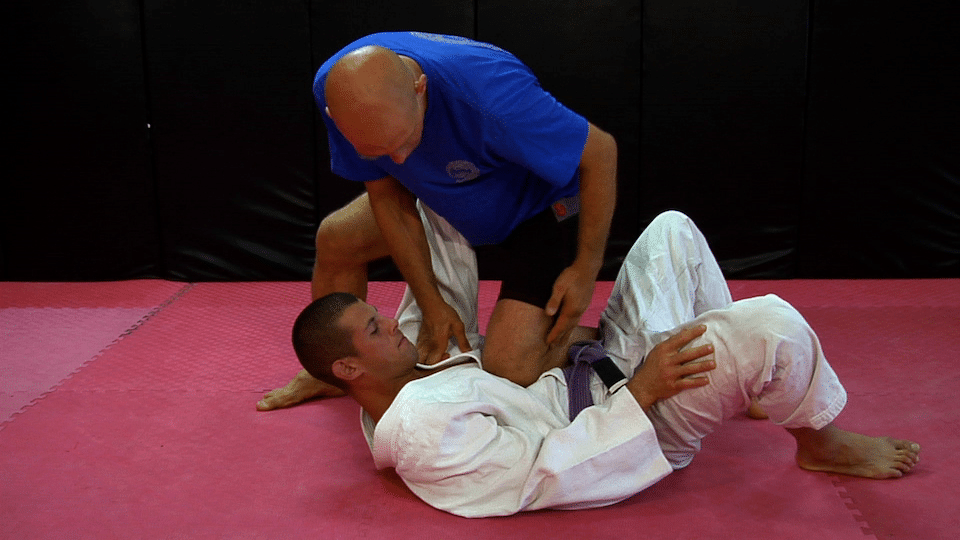
Typically diaphragmatic choking is accomplished using the knee-on-belly position.The knee is placed fairly high on the belly, usually just near the solar plexus.To increase pressure the arms are anchored on your opponent and pulling him into you.
But don’t think that the knee-on-belly is the only way to accomplish this type of choke! There are lots of different ways that you can put this principle into action, and all of them put your opponent into a terrible position: either he has to tap out, or he’ll give you an opening for a different fight-ending submission (this exact topic is covered in detail in my Black Belt Concepts course).
This pressure means that the diaphragm and lungs can’t operate properly and that his breathing becomes labored and ineffective. Maintain this pressure on the diaphragm and lungs, and he will be forced to submit from lack of air reaching his lungs.It might be a little bit slower than closing down the windpipe, but the final effect is the same.