


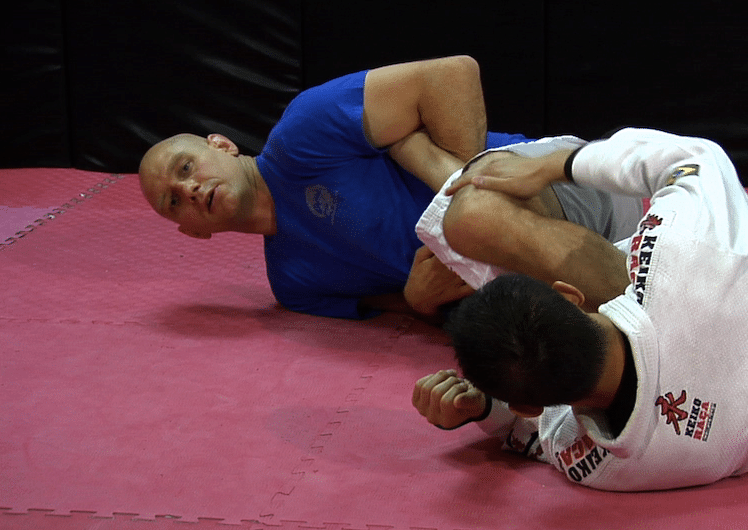







There is a certain type of opponent who is best described as a compulsive leglocker. You know the type: no sooner have you put him in your guard than he flings himself backwards and starts attacking your lower body with ankle locks, toe holds, kneebars and other submissions.
You generally don’t want to trade leglocks with this kind of opponent – he uses them all the time and will probably get to the submission first – so what can you do?
There are certain strategies that are very helpful in shutting down the game of a leglock-oriented opponent:
- Maintaining a closed guard if you are on the bottom. There are very few effective leglocks that can be used against a closed guard.
- Breaking your opponent’s posture if they are in your guard: it is very difficult to go for a leglock if you can’t posture up first.
- Maintaining your grips: if you are wrestling with the gi then sleeve and/or collar grips make it difficult for your opponent to entwine your legs with his arms and throw himself backwards.
- Passing the guard on your knees. There are quite a few leglock attacks that can be applied by an opponent who is on his back when you are standing in his guard. If you stay on your knees when passing his guard you will make yourself less vulnerable to most leglocks (at the expense of being more vulnerable to chokes and armlocks).
Finally I should point out that you should still practise your leglock counters.
For every submission there are multiple counters and escapes, and you might want to review and practice them just in case your opponent figures out a way to counter your other strategies. A working knowledge of leglocks themselves is very useful to understand how to counter them, and it IS possible to be good at leglock counters without being good at leglocks themselves.