Grapplearts Home | Grappling Videos | Articles | Techniques | Featured Photo | About Us | School Database | Links | Contact
Welcome to the Grapplearts blog! This blog exists to share a variety of different thoughts, opinions and techniques on a regular basis. If you are looking for the regular Grapplearts Resources found at grapplearts.com, click the link below. Read more...
  • Slider1
  • Slider2
  • Slider3
  • Slider4
banner1 banner2

banner3 banner4


Archive for the ‘chokes’ Category


Some recent pics; see me get choked!

Tuesday, September 20th, 2011

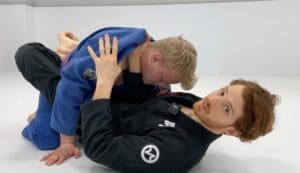
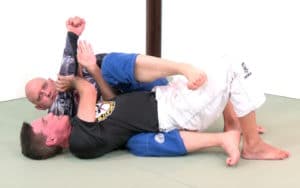
I just briefly want to share some behind-the-scene pics from my recent filming session with Emily Kwok.

Emily is a BJJ black belt who has trained with some of the best people in the world.  And she’s been very successful at the highest levels of competition in BJJ, Submission Grappling and Women’s MMA.

We haven’t finished the editing the DVDs yet, but you can see some quick pictures taken during filming by clicking here.  It’s a Facebook link but you DON’T need to be signed up or logged into Facebook to see it:

http://www.facebook.com/media/set/?set=a.378068794966.55245.23809659966&type=1

And while we’re on the topic of Emily, she did a fantastic interview with me a couple of months ago which you can access as an audio file or a full transcript by clicking here:

http://www.grapplearts.com/A-Womans-Journey-in-Brazilian-Jiu-Jitsu.php

Critical Submission Details

Sunday, September 4th, 2011

Are there any submissions out there that you just can’t finish?  You can set it up, lock it on, and strain for all you’re worth, but your opponent just won’t tap out?

It happens all the time.  In fact, I’m not immune either.  There have been lots of submissions where I initially thought, “oh man, this will never work for me!”

But take heart!  Usually there are just one or two critical details that need to be fixed before you experience that magical quantum leap in your ability to finish people with that submission!

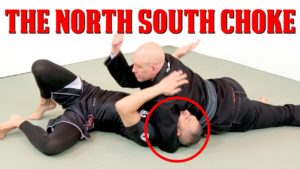
For example, the North-South choke was a problem for me for the longest time.  At least 3 different people broke it down for me in painstaking detail, but it still wouldn’t work…

I’d get to the North-South choke position, I’d wrap the head with my arm, turn his face with my ribs, and shimmy backwards.  But no matter how much I shimmied or how hard I squeezed, I rarely finished the choke on skilled or tough opponents.

But eventually I figured out the detail which made all the difference in the world for me. In the end, that final key detail was all about positioning my arm correctly in relation to his neck.

What I had to do was get the center of my armpit directly above his Adam’s apple before shimmying and squeezing.  With this ‘secret sauce’ my North South choke finally became a serious threat.

Now there are a only a limited number of things you can think about when you’re trying to tap somebody out in the heat of the battle.

So try to focus only on a few key details, rather than trying to make sure everything is absolutely perfect.

But keep these one, two or three critical things in the forefront of your mind when you’re using the submission: they are the cruxes of the move!

In the North South choke, as I maneuver into the final position I’m literally reminding myself, “armpit over the Adam’s apple, armpit over the Adam’s apple…’

Most submissions have at least one crux detail you need to work on before you can start tapping people out.

Now your crux details may not be my details: maybe you’re already doing everything correctly that I was doing wrong, or maybe you’re making entirely different mistakes…

Nevertheless, examples are always useful, so here are some crux details that have really helped my BJJ career:

  • Clock Choke: slide the side of your ribscage onto the back of your opponent’s neck,

The funny thing is that two different people can use different sets of instructions to express the same detail…

Consider the ‘Clock Choke,’ a great attack to use against a turtled opponent wearing a gi.

When my BJJ coach Marcus Soares teaches this choke he often tells people to “put your head onto the ground” just before finalizing the choke.

But when I use the same move I don’t put my head on the ground.  Instead I think about sliding the side of my ribcage onto the back of his neck.  This is where an executioner’s axe would come down! (Can you tell that I’ve been reading too much Game of Thrones?)

So, ribs on the neck vs. head on the ground: who’s right?

Well he’s a 7th degree black belt who specialized in clock chokes!  So if you do it his way you’re going to be OK for sure.  But I still like to think that we’re both right…

Both ways of doing it end up sliding your weight off of your opponent’s body and pinning your his head on to the mat.  That’s the real key, and the reason why you’re moving all around.

For whatever reason, though, it’s just faster and easier for me to tell myself, “ribs on neck, ribs on neck…”

You can take two different routes to the same destination.  You can also have two different wordings to finalize the submission.

Ultimately it comes down to personal preference and whatever works for you. So go forth and find some simple words to describe the crux details for your own submissions!

Three Timings for Getting Out of Submissions

Sunday, August 14th, 2011

Yesterday I was reading a thread on a popular forum discussing MMA fighter Ben Henderson’s ability to slip out of submissions.  And I ended up posting something about the topic of submission defense myself, which I’ll share with you below.

(What I didn’t say on that post is that the topic of getting out of submissions is really near and dear to my heart just now, because it ties in well with a really cool product I’m getting ready to release.  But more about that another day…)

Anyway, here’s something that a lot of people don’t realize about countering or defending submissions:  there are at least three distinct timings you can use

1, You can shut down a submission early, or preemptively.  Let’s say that you’re using your guard and your opponent starts going for an ankle lock.  He encircles your ankle with his arm, and you can see what’s coming, but he hasn’t  You rotate your leg (the right way, of course) and your foot pops out before you’re ever in any real danger.

This is an early escape, BEFORE he applies the lock.  If you have a choice then shutting down a submission early, before it ever really gets started, is definitely the best way to go!

2, You can escape as your opponent is applying the submission. Back to the ankle lock: let’s say that he’s locked it on and is falling backwards.  If you can ‘hitch a ride’ and get to the top as he falls back and then squish him like a bug, then you’ve just countered it DURING the attack.

Escaping submissions as they’re being applied is the most under-utilized timing, but it can be very useful.  It’s just so much easier to do it now rather than during the next stage (i.e. when it’s fully locked on).

3, Finally  you can do a late, or AFTER THE FACT escape.  These aren’t as easy or as high percentage as escaping before or during, but you still need to know them.

Back to the ankle lock for sec; let’s say that he falls all the way back into a good position, gets on his side, starts arching, etc.  At this point you might be trying to uncross his legs and escape your hips out sideways, or (if it’s legal) apply a heel hook to one of his legs, etc.  Last minute, hail mary type of stuff

So there you go; I’ve just tripled what you need to know!  You might’ve thought you only needed one good counter to the triangle choke, the spinning armbar or the inside-out, upside-down, cross-collar Jehoshaphat choke.  But now you know that you actually need to learn THREE defenses, early, middle and late.

How Marcelo Garcia Defeats Larger, Stronger Opponents

Thursday, April 28th, 2011

There’s nothing quite like watching a smaller, lighter, weaker person use their technique to defeat a bigger, heavier, stronger opponent.

And  when it comes to tapping out bigger, stronger, heavier opponents there’s nobody quite like Marcelo Garcia.

Not only is he a four time world BJJ champion and three time ADCC champion in his weight class, but he’s often fought in the absolute division as well.  In fact he’s faced weight disadvantages of a hundred pounds or more, and has almost always emerged victorious!

Here’s a video we shot at his NYC academy where Marcelo actually breaks down his best strategies and favorite techniques for both sweeping and tapping out larger opponents.

Go watch it now: it’s really good!  And believe me, he defeats larger, stronger guys with these exact techniques ALL the time!!

P.S. While we’re talking about fighting larger opponents check out this 5 DVD Set I filmed with 3 x World Champion Emily Kwok.

Emily trains with Marcelo and has basically ‘reverse-engineered’ his game.  It’s full of techniques, drills, strategies, and tips to Defeat the Bigger, Stronger Opponent. Since I produced it I’m clearly biased but it’s really good and has gotten amazing reviews from grapplers large and small!

Marcelo Garcia Chokes Me Out (Repeatedly)

Tuesday, April 19th, 2011

As you get better you’ll run into the turtle position more often.  That’s because it gets harder for your opponents to put you back into guard, which encourages them to go to their knees in order to escape a bad position.  So knowing how to attack the turtle effectively is a key skill in both BJJ and submission grappling.

The past few months I’ve been working on attacking this position with mixed success.  Some things worked, some things didn’t, and I had a few questions.

It was definitely time to check in with the master of attacking the turtle: Marcelo Garcia in NYC.

Marcelo is probably the best person in the world at taking the back and finishing people from there.  He’s done it over and over at the highest level of competition for years now, both with and without the gi.  That’s why he’s a four time world BJJ champion and three time ADCC champion.  (To fight at this level, for that long, both with and without the gi is pretty amazing!)

Marcelo is known for having an incredible rear mount.  He proved it the very first time he caught our attention and captured our imagination by tearing a swatch through the competition at the Abu Dhabi Combat Championships in 2003

But in recent years he’s also developed his variation of rear mount known as the ‘crucifix.’  In the crucifix you remove one of your opponent’s arms from the equation, allowing you to use two hands to neutralize his one remaining arm and then attack his defenseless neck

Marcelo seems able to magically slap the crucifix on just about anybody and finish them from there.  It’s an awesome combination with the more traditional rear mount position.

On my recent trip to NYC, deciphering Marcelo’s turtle attack strategy was a top priority item.

The best way to understand something is to experience it first hand.  I wanted to see how exactly he took the back.  I wanted to feel how he countered my escape attempts.  I wanted to know how he locked in his infamous variation of the ‘crucifix’ position.

So I started our sparring session in turtle position and returned to it every time he got me with a submission. Now maybe starting in the turtle position against a guy who arguably has the best back attacks in the world might not have been the great idea if the goal had been to survive and launch my own offense.  But the goal was to learn!

I’ve been told I have a pretty tight turtle game and that it’s hard to catch me in something from there, but not for Marcelo.  Somebody call Greenpeace, because he slaughtered my turtle again and again.

I experimented with different initial hand positions.  Tap tap.

I tried some of the moves I’ve been frustrated by when trying to get the crucifix, but Marcelo had the answers. Tap tap.

I tried denying him his initial knee and foot position and rolling him over. I thought I was out, but he countered with a beautiful backroll counter.  Tap tap.

I tried linking my hands together and turning towards his legs, the same way my training partners have sometimes been escaping.  All to no avail – he countered easily.  Tap tap.

So now I have my answers!  All I need to do now is repetitively drill them and then use them in sparring.  Training partners: watch out!!

If you haven’t already used up your free trials at mginaction, then you’ll be able to see some of the video clips from Marcelo’s academy:

1: Here’s the guillotine technique he taught in class before we sparred. And yes, he caught me with that exact move in sparring a couple of times.

2: Then here’s me sparring Marcelo Garcia! Watch how he takes my turtle apart and nails me with choke after choke.

3: And this third clip is cool.  Marcelo taught everybody the exact moves he used to counter my best crucifix escape attempts. Although shown as a guard pass counter these are the same moves he used at the  0:21 and 4:06 mark of our sparring session.  Another cool thing is that he taught this technique in the context of training with the gi, but used it without the gi in our sparring match.  Obviously this stuff translates well between different platforms!

(If you end up at a sign-up page instead of a video when you click these links it’s probably because you’ve already used up your free visits to the MGinaction.com site.  Sorry!)

So if you’re visiting NYC I highly suggest dropping in at Marcelo’s school.  It’s currently at number 25 West 36th street, on the sixth floor.

But if you can’t train there, then the cool thing about the school is that the camera is running whenever Marcelo is teaching, sparring, or helping students with a technique.  Then they edit, label and tag all that video and upload it to his website so that you can easily move from one related technique to another.

MGinaction has close to 5,000 techniques and sparring clips on it, with more being added daily.  There are techniques for both gi and no gi.  You can learn strategies, tactics and principles.  You can go back and forth between seeing a technique taught and Marcelo using it in sparring.

It’s a pretty amazing site, but DON’T take my word for it! If you sign up as my reader then you automatically get a 7 day free trial period.  If you don’t like it, or if the techniques don’t work for you, or if you don’t think it’s worth the $$ then just get in touch with them and they’ll refund your entire fee.

No pressure, but it really is one of the best values for a grappling instructional site.

Finally, my most sincere thanks to Marcelo and his crew for making me feel very welcome at the academy!

Front Headlock Submission Attacks by Erik Paulson

Thursday, February 24th, 2011

A while ago I interviewed Erik Paulson, one of the best MMA coaches in the business (click here to listen to that very informative conversation).

Now if you’ve ever trained with Erik, you’ll know he’s an encyclopedia of submissions.  He can show you an incredible number of rapid-fire leglocks, chokes, armlocks, wristlocks, neckcranks and kneebars.

So I was surprised when he started talking about how he’s started limiting his game and reducing the number of submissions that he uses on a day-to-day basis.

His point was that in his sparring he’s sticking to the submissions that are high percentage for him.  It’s important to understand that this is for his personal go-to moves: he’ll still teach all the moves he knows, because what’s low percentage for him might be the perfect move for someone else!

So I pushed him for examples and he spoke about two particular series of attacks – the first starting from the front headlock position, and the second from side control.

When trained with Erik in Seattle at the beginning of this month I ended up filming both sequences!  If you’re curious as to the high-percentage submissions from the front headlock, then watch the video below

In the above video Erik shows the ‘Grovit’ facelock/neckcrank, but the angle of the camera isn’t very good.  So here is Catch Wrestling legend Billy Robinson breaking down the Grovit for you in some additional detail.

I hope to get to the side mount series out to you next week!

Two Rear Mount Secrets

Wednesday, January 12th, 2011

Usually getting better at grappling is a slow process, requiring thousands of repetitions and many hours on the mat to master a technique.

But sometimes transformations occur overnight!

In the video above I share two ‘secrets’ that will double the effectiveness of your rear mount. These tweaks will make it much harder for your opponent to escape, and leave him much more vulnerable to your submission attacks!

No training required – just watch the video and then add the information to your game:

Toby Imada’s Amazing MMA Triangle Broken Down For You

Wednesday, July 21st, 2010

A lot of people thought that Toby Imada’s triangle choke was the best MMA submission of 2009.  And they may be right – it was a stunning display of quick thinking and ‘sticktoitness’ on Toby’s part.  Here’s the clip of the match highlights including the spectacular submission:

Last week I uploaded posted an article and video called 5 Triangle Chokes You Need To Know, and shortly thereafter some people asked me to break down Toby’s famous triangle.

The thing is, that although Toby used a different entry and finished it in a standing position it’s still exactly the same choke as the Side Triangle (or ‘Yoko Sangaku’) that I show at 2 minutes and 41 seconds the 5 Triangles Video.  All the same principles and adjustments apply.

But I’ll do you one better!  Here’s a video I found of Toby breaking down how to get into the Side Triangle when your opponent is in the turtle position (don’t worry, you don’t have to get your training partner to stand up to train it):

Judo players successfully use this choke all the time, but the majority of BJJ players and no-gi grapplers don’t even know it exists.  So add it to your repertoire, and then go forth and ambush your training partners with it!

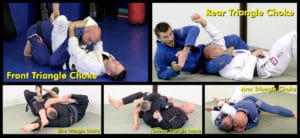
Five Triangle Chokes You Should Know

Tuesday, July 13th, 2010

There have been a lot of triangle chokes in MMA recently, including those used by Fabricio Werdum against Fedor Emelianenko, Chris Lytle against Matt Brown, and Brock Lesnar against Shane Carwin

But the term ‘triangle choke’ can be used for several different submissions, and this can be confusing to the novice or intermediate-level grappler. So to make sense of the five major types of triangles check out my latest Youtube video.  I’ve put some really good stuff in here!

The Best Brabo Choke Resources

Tuesday, March 2nd, 2010

Shortly after Paulo Thiago defeated Mike Swick at UFC 109 I was asked to write about the ‘Brabo’ choke (Thiago finished the fight in the second round using the Brabo choke).

I’ve always had a suspicion that this attack (also known as the ‘Darce choke’) would become a more popular attack. That’s why, several years ago, I asked Marcio Feitosa to teach a photo tutorial on the Brabo choke.

Grapplers are finally catching on that the Brabo choke is a very powerful attack that you can hit from a number of different position. That’s why we’re seeing it more and more in submission grappling, Brazilian jiu-jitsu and MMA.

All this being said, I have to point out that the Brabo choke is NOT a submission that I’ve studied very deeply. Sure, I could show you the basic mechanics and a few tricks, but I’m just not your man if you want a ton of detail about this attack.

Fortunately someone else has done the heavy lifting on the Brabo Choke: Matt Kirtley has put together a really good series of articles on this attack at Aesopian.com. Here’s a list of articles that you should read if you want to make it one of your go-to moves:

  1. Brabo Choke Homework: Trigger Position
  2. Brabo Choke Homework: Progressive Grips
  3. Brabo Choke Homework: Crossing the Arm
  4. Standing Up, Sitting Out and Brabo Chokes

Finishing the Rear Naked Choke

Thursday, August 6th, 2009


Grappling is usually a refined and elegant martial art. But you can’t always use sophistication and leverage to get what you want…

Let’s look at question that was recently forwarded to me, and see why sometimes you need to go lowbrow!

Q: “I have a quick question on the Rear Naked Choke (RNC). I have come across a few guys who are excellent at tucking their chin well into the crook of my elbow when I’m trying to give them the RNC, and obviously it’s not choking them because their chin is in the way. What’s an effective way to get their chin up somehow after they have blocked my choke attempt.”

A: When it comes to attacking from rear mount, the RNC is definitely one of your pieces of heavy artillery! Anytime you’re on someone’s back, you should be ready to slap it on. (Click here for a technical step-by-step breakdown of the Rear Naked Choke).

But dealing with the tucked chin defense can be difficult, particularly if your opponent is both strong and stubborn. Here are some answers to use in just that situation:

  1. Head Push. Get the rear mount and push their head forward. They react by pushing back into you, so release the pressure and slip in the choke. This only works on beginners, but it’s still a handy trick to know about!
  2. Forehead Pull. Place your palm on his forehead and pull it straight backwards, exposing the neck. Then, maintaining the pull, shoot your OTHER hand across his throat and start working for the choke. (This works best when you’re in belly-down rear mount).
  3. Crossfacing. Say you’re rear mounted and his chin is down. Drive your right fist and forearm across his face, forcing him to look to the left, and then drive your left arm into position across his throat. Sometimes you have to do this two or three times (left, right, left…) before you get the opening you need to attack the neck.
  4. Nose Pressure. Some people advocate using putting the forearm just under the nose, and then raking it upwards to open up the space at the neck (ouch!).
  5. Choke the Jaw. Maybe my favorite option is simply apply the RNC directly over the chin and squeeze. If you do this with consistent and sustained pressure you can pull his jaw back into his windpipe and choke him that way (it just takes a little longer). It’s also painful, and often he’ll lift his chin up to get the pressure off his jaw, giving you perfect access to his neck.

As you can see, some of the above options are leverage-based and others are pain-based. I’m not typically a fan of pain-based manipulations, but sometimes it’s the right thing to do!

Just remember to save the pain-based stuff for competition. Or on people you really don’t like. Or on really good friends (who’ll forgive you). Please DON’T use it on the brand new guy who’ll quit and never come back, or on someone who’ll really take offense.

But even if you don’t want to use the ‘grinding’ options yourself, you still need to know about them. Someone might try them on you, and if you’ve seen it before then you’ll be prepared to deal with it.

Happy Rear Naked Choking!

Bring ‘Em Back Alive: More On Recovering From Chokes

Thursday, July 30th, 2009

The last blog post (Choke Recovery in Grappling) prompted some lively discussion and debate when I posted it on the Sherdog Grappling Forum and on MMA.tv. I also received a number of emails on the topic.

The most common question by far, was “what about lifting the unconscious person’s legs up into the air to bring blood into their brain.”

I’ve have seen the legs-in-the-air technique used to resuscitate unconscious grapplers. In fact, it’s even been used on me (I was 12 years old and got knocked out by a Judo throw in the adult class. I awoke with my legs in the air and a whole bunch of very concerned faces looking down at me)!

But I didn’t talk about it in my last newsletter for a simple reason – I’ve never seen any sort of research about the safety or efficacy of this resuscitation technique.

It seems fairly obvious that it ‘should’ bring more blood to the brain, and that it ‘should’ help people wake up faster. But that kind of thinking can be dangerous. Medical history is littered with techniques, procedures and drugs that ‘should’ have helped people, but instead caused grievous bodily harm.

A forum participant called “BJJ Medic” finally helped me out. He told me about some research on the so-called Trendelenburg postion. This head down, legs up position was used during and after World War 1 to help manage shock.

Recent research, however, indicates that this position does nothing to help with shock, and increases the risk of choking on your own tongue (which is, by the way, the most common cause for blocked airways in unconscious people). Click here to read The Myth of the Trendelenburg Position for yourself.

So until someone actually does proper research on the legs-in-the-air position, specifically with regard to waking up unconscious people, I’m NOT going to use it. The ‘treatment’ at this point only has risks, and no proven benefits.

BUT I SHOULD HAVE MENTIONED THIS

If someone is unconscious from a choke you should check to see if they’re breathing. If they’re not breathing, then either move them to the recovery position (3/4 prone) OR start rescue breathing. You should also check for a pulse, and if they don’t have one, start CPR.

I think that every serious grappler or martial artist should have basic CPR and first aid training.

But even if you don’t have the training to do rescue breathing and CPR, it’s very important to be able to tell the 911 dispatcher “my buddy is unconscious but has a pulse and is breathing”.

Choke Recovery in BJJ and Submission Grappling

Monday, July 27th, 2009

The first time I saw someone choked unconscious it scared the crap out of me. And it was made worse by the fact that it was a friend of mine…

It was many years ago at a local tournament. My friend was winning his match but got caught in a sneaky gi choke. He was (and still is) a stubborn bastard, so he refused to tap and passed out. He might have been out for about 10 seconds before anyone realized what was going on.

When the referee finally separated the two competitors, I could see my buddy lying flat on his back and he wasn’t moving. From my position in the stands I couldn’t even see if he was breathing.

But then it got even worse…

He started to snore REALLY loudly. We’re talking horrible-keep-you-awake-from-the-next-room-sleep-apnea kind of snoring. Everyone at the tournament could hear it. Then, just to make things even more dramatic, he started convulsing a little bit, like he was having a small epileptic seizure.

Finally – to my infinite relief – he woke up, sat up and looked around sheepishly. Objectively he’d probably only been out for a total of 15 to 20 seconds (including the snoring and convulsing) but it sure seemed a lot longer than that to me at the time!

In fact this is a fairly normal sequence for someone who has been choked out. The snoring is normal. The mini-convulsions are to be expected. And they’re going to be a bit light headed when they wake up.

Judo and BJJ coaches have different opions about what to do if someone gets choked out. The most common approach is to stand around and wait for the person to wake up. And this works just fine 99% of the time.

There are traditional judo resuscitation techniques (known as “kappo“). Kappo is an esoteric subject, and I don’t know much about it. But I’ll give you some guidance coming more from a western first aid point of view.

In first aid class I’ve been taught to roll unconscious people onto their side or into the 3/4 prone position (IMPORTANT: you only do this if you’re sure that there’s no neck or back injury). Being on the side helps drain fluids from the mouth and prevents the tongue from blocking the airway. And there are some Judo coaches who agree that this is a good idea.

I don’t want to scare you with all this talk about unconscious people. Most accounts of chokes gone bad involve cops trying to restrain someone high on PCP by squeezing their neck with a billy club. Hopefully that’s not happening at your club.

In fact, chokes and strangles are fairly safe.

The Kodokan, which is the central organizing body for Judo, has conducted studies on the safety of chokes (“shimewaza”). The results are encouraging: Judoka have been choking each other for more than 100 years without any reported fatalities.

Attacking the neck is part of submission grappling and BJJ. If you do this sport long enough then eventually someone will get choked out right in front of you. Now you know what to expect when that happens!

Another Reason Why BJJ is Better Than Boxing

Thursday, June 18th, 2009

A few days ago, while traveling, I made my way down to Dartmouth’s Fitplus gym. That’s where I participated in a BJJ class taught by 6th degree Carlson Gracie black belt, Alexandre Penao.

Despite feeling slightly under the weather that evening I really enjoyed the training session. People often talk about the sense of camaraderie in the BJJ community. This is never more in evidence than when you walk into a new club and are welcomed on the mat as a brother-in-arms.

(And then your new friends try to choke you unconscious…).

One cool thing that happened that night is that Alexandre Penao showed us a technique that none of us had ever seen before.

It was a cool rolling choke against the turtle position. Then he showed us how to use that choke to set up an entry to the mount and choke the guy out from there. This second technique was also entirely new to me.

Now I’ve been doing BJJ a long time. And I’ve been practicing other grappling arts for even longer. But I hadn’t seen this stuff before. Not in person. Not on Youtube. Not in my extensive library of books and DVDs.

But the funny thing is that in BJJ this happens ALL THE TIME! Someone is always dreaming up new ways to choke somebody out, twist them into a pretzel, or flip them overhead.

No matter what belt rank you are, so long as you continue training you’ll accumulate new techniques, details and insights until the day you step off the mats for good.

We’re very luck that our sport is rich enough to allow this kind of continued growth.

How often do you think that an elite level boxer goes into the gym and has someone show him a completely new punch? How about two completely new punches?

This just doesn’t happen in boxing. Ever!

But in jiu-jitsu and submission grappling there’s always something new to learn.

Keep on rolling

Stephan Kesting
Grapplearts.com

A Lifetime of Learning

Thursday, April 23rd, 2009

At my recent seminar on Unorthodox Positions I thought that I would be doing all the teaching, and that the students would be doing all the learning. Well I was wrong…

One of the things I taught was a cool entry into the north-south choke from the offside kesa gatame position.

The north-south choke is something I’ve worked on a LOT over the last couple of years. After many mistakes and false leads I finally ‘get it,” and feel comfortable teaching it to others.

My demonstration partner for this technique was fellow Carlson Gracie black belt Adam Ryan.

After I taught the ‘traditional’ north-south choke Adam came up to me and discretely inquired if he could show me something. He then proceeded to demonstrate a killer variation that makes the choke come on INSTANTLY!

It would have been hypocritical of me to keep this technique to myself. So I asked Adam to also teach his variation to the group. I figured that if I hadn’t seen it before then chances were pretty good that not too many other people knew about it either.

At the end of day I was very happy.

Not only had the students learned a ton of new material that I knew would work for them, but I had came away with something too! In fact I used it to submit a tough opponent on my very next training day.

Of course Adam is a formidable competitor, a great teacher and a BJJ black belt. Therefore it’s not surprising that he has lots of tricks to show me. But in my experience, most blue belts also have a trick or two they can show me.

Most schools, after all, have only one instructor, but if you keep an open mind then you can have a whole army of people – your fellow students – teaching you stuff, all the time.

There is nothing sadder than an ‘expert’ who has closed his mind to learning. When I stop learning then please start shoveling the dirt down on top of my grave.

Brabo Choke Defense

Tuesday, April 14th, 2009

A fan of the half guard recently asked me how they could avoid getting caught in the Brabo choke:

“I like going for the foot grab sweep from half guard. My problem is that I always get caught in a guillotine choke or Brabo choke when I go for the leg of my opponent. What can I do to stop getting choked all the time?”

The first step of defending any technique is to understand the technique. Once you know how an attack yourself then your spider sense starts tingling when your opponent starts to set it up on you.

Brabo choke specialists typically like to attack when their opponent has an underhook. Here’s one example of how to apply the Brabo choke.

So it’s true that getting choked from the half guard is a legitimate concern. But that doesn’t mean that the half guard or the foot grab sweep is useless.

Every single position and technique has its vulnerabilities: if you throw a jab your opponent might slip it and counter with an uppercut, if you use the open guard your opponent might have an opportunity to footlock you, and if you use the half guard you have to watch out for the Brabo choke (aka the “D’Arce choke”).

The trick is to be aware of the potential dangers of a position and taking precautions to prevent the counterattacks!

So let’s get back to the half guard. In order to attack with the foot grab sweep you need to first secure the underhook with the top arm. BUT once you get the underhook you shouldn’t just hang out there.

The underhook is a means to an end, NOT an end in itself.

And a related mistake is to get the underhook and then start grabbing for your opponent’s foot. This is incorrect. To do it properly you first need to move down, down down.

You should have your ear resting on his hip and your face almost in *ahem* his crotch before you grab the foot and go for the sweep.

And if you’re down that far then it’s very hard for him to get his arms into position to choke you.

But let’s say that you screw up, give him the opening and he attacks with that darn Brabo choke. If you own it, I suggest you check out the series of defenses to this choke that I covered in my Dynamic Half Guard DVD.

If you don’t have that DVD then one simple Brabo defense is to throw yourself hard, flat on your back, BEFORE he finalizes his hand position. To avoid getting rolled he has to release and post his hands, which also gets you out of the choke.

With regards to the guillotine, the most likely time for your opponent to lock it on is once the sweep is already happening and he’s falling back onto his butt. So keep your awareness high at all times: if he slaps on a guillotine during the sweep, as he’s falling, then scramble to the correct side to counter the choke.

Hope this helps…

Emergency Rx for Cranked Necks and Strained Backs

Friday, March 27th, 2009

Yesterday I was training my side mount escapes. My partner and I repeatedly started with me pinned, and then we worked until I got out or until someone tapped.

Well I got sloppy and ended up on the receiving end of this rather horrendous armlock/choke/neck crank technique that’s one of Marcus Soares’s signature moves.


So there I was, getting squished. I was in pain, but pride kept me from tapping out (which, is, of course the wrong thing to do). I squirmed this way and that, trying to find a way out.

I ended up escaping by the skin of my teeth. I literally had to I ‘walk’ his leg off of my face using my face muscles, alternately contorting my face into a frown, then a manic smile. Frown. Smile. Frown. Smile. Frown. Smile…

Fortunately the combination of luck, determination and desperation eventually paid off and I was out of the submission and out from under side mount.

Not surprisingly, though, my neck was pretty sore that evening. A bad kind of sore. That oh-boy-I’ve-done-it-again kind of sore.

That was yesterday. And today my neck is almost 100% again. So what did I do?

Nowadays almost everybody knows about using the R.I.C.E. formula to deal with sprains, strains, pulls or tears. This 4 step process consists of:

R = Rest (i.e. don’t make it any worse)
I = Ice (10 minutes on, 10 minutes off)
C = Compression (a not-too-tight ACE bandage, for example)
E = Elevation (lifting the injured body part above the level of the heart)

When it comes to neck and back injuries you’re kind of limited though – compression and elevation don’t apply.

You really don’t want to be found unconscious with some sort of band wrapped around your neck – the optics just aren’t good (honest mom, I hurt my neck…). And with regards to elevation it’s hard to elevate your neck above your heart more than it already is.

This leaves us with steps one and two: rest and ice. It’s funny: almost everyone will ice a sore elbow, but very few people apply ice to a sore neck. This is a mistake.

That evening I put a gel ice pack into a sleeve and tied it around my neck, 10 minutes on and 10 minutes off, all evening. The 10/10 rule is important, because it’s easily possible to give yourself frostbite by leaving ice or ice packs on too long.

I even ran an errand with that neoprene sleeve around my neck. Yes, I got some funny looks, but I’m 100% certain that the early and aggressive icing had a lot to do with my quick recovery.

The other tool in the R.I.C.E. formula for sore necks and backs is rest. Notice that it does NOT say ‘stretch’. If you’ve recently strained your neck or back then DO NOT STRETCH IT.

When you strain a muscle it’s typically been slightly torn or damaged. The pain and stiffness is a way for the muscle to protect itself. When you stretch it too early, you’re just aggravating it further.

The worst back pain I ever had is when I came home from work with a very sore lower back and tried to stretch it out. At the end of that (gentle) stretching session I was so seized up that I couldn’t get up off the ground. I lay in the same spot on the floor for 24 hours, wondering if I would ever walk again.

It’s usually OK to start gentle stretching AFTER the inflammation has gone down – typically 3 to 4 days in the case of a mild strain or sprain.

So to summarize: if you strain your back or neck, DO get ice on it right away, but DON’T try to stretch it out.

A BJJ and MMA Application for the iPhone & iPod Touch

Friday, March 20th, 2009

Today I’d like to tell you about my brand new application for the iPhone and the second generation iPod Touch. It’s called “Grapplearts Submissions“, and it’s the very first tool of it’s kind for learning BJJ, submission grappling or MMA techniques.

(We’re still tweaking the application to work properly with first generation iPod Touch, so if you have one of these stay tuned and I hope to have good news for you soon)

This application is designed so that you can learn grappling anywhere.

The idea is that you can learn the armbar from mount while riding the bus, or remind yourself of the key points for the triangle choke while waiting in line! Now you can bring your techniques with you to class and drill them with your friends!

Click here to see the application page on iTunes (if you have iTunes installed on your computer), or click here for the info page on Grapplearts.com.

This application is designed to be used on your iPhone or second generation iPod Touch. There are 31 different armlock, leglock and choke entries, AND we show you the details that make those submissions work. In addition, we plan to add other techniques to future updates, which you’ll get free!

A quick note: this is a big application because it has LOTS of video instruction. That’s why you need a wifi network if you want to download it to your iphone directly.

If you don’t have a wifi network then just use iTunes to download the app (search for “Grapplearts Submissions” in the iTunes store). Then synch your phone, just like you do for your music, calenders, etc.

About the price: my co-developers begged, whined and pleaded until I agreed to initially release it at at the nominal cost $0.99 (for the first week only). I personally think that this low price is a mistake, but compromise is the soul of partnership…

After March 27th I’ll raise the price for sure.

So here’s how to get the application, and some links to more information about it:

Finally, if you DON’T have an iPhone or an iPod Touch then I’d still be eternally grateful if you could help get the word out to the grapplers and MMA enthusiasts you know who DO have these tools.

New DVD – "Step-by-Step Submissions"

Friday, January 23rd, 2009

I just want to tell people that I’m adding another DVD to my Roadmap for BJJ Package. It’s tentatively titled “Step-by-Step Submissions”.

This new video will be in a different format from my other DVDs. Basically it’s a reference tool so you can quickly look up the steps and the key points for the most important no-gi submissions. Think of it as the Cole’s Notes for chokes and joint locks.

Featured on “Step-by-Step Submissions” are 31 setups for 10 different submissions. Each setup is first broken down into the correct sequence and then shown at ‘action speed.’ I also go into the key details that ‘make or break’ each choke or lock.

So here’s the deal:

This DVD is in the final stages of editing. If everything goes according to plan I should be able to start shipping it out in about 3 to 4 weeks.

Everyone who has already bought the Package gets this new DVD shipped to them for free as soon as it’s ready. No shipping, no postage, no nothing.

Everyone who buys the Package between now and when the new DVD is released will get everything else shipped to them right away (i.e. no waiting), and then I’ll also send you “Step-by-Step Submissions DVD” as soon as it’s done. Again, the shipping is on me.

Check out the Roadmap for BJJ Package here!

BTW – I think that the addition of yet another DVD takes an already great product and makes it a fantastic product, but of course I’m a little biased ;-)

One more Von Flue Choke

Sunday, August 31st, 2008

As you know, in the last few newsletters we’ve been discussing body position for guillotine chokes and using the ‘Von Flue’ choke to recounter the guillotine. If you missed them you can click to see the first post here and the second post here.

Well, thanks to Shaldag on the Sherdog.net forums I recently I found yet ANOTHER example of a the Von Flue choke being used in competition. This one is nice because it shows both things we’ve been talking about: the battle to circle the body so as to nullify the power of the guillotine, and then finishing the fight with the Von Flue choke.

So watch this video with our recent discussion in mind. The positional work to counter the guillotine (and the subsequent choke) starts at about 2 minutes and 14 seconds:

Everybody Was Von Flue Fighting…

Friday, August 29th, 2008

When people are learning the Von Flue choke they often find that their opponent can bridge them over and they end up on the bottom. If you’re getting rolled into a bad position when trying this choke then check that your legs are perpendicular (i.e. at 90 degrees) to your opponent. If his head is pointing to 12 o’clock, then your legs should either be to 3 or 9 o’clock. The closer your legs get to his head the easier it is for him to bridge you over.

Also keep in mind that some grapplers just have very explosive bridging power. If I was unsure about my base and going against one of these bridging dynamos I might choose NOT switch my legs, and simply use shoulder pressure. It’s the same choke, just relying less on body weight, more on arm strength, and a bit slower than the inverted-leg-switching Von Flue choke I showed in aforementioned blog entry.

To illustrate this non-leg-switching variation, here is another video of another Von Flue choke in action, starting at about 1:00 in the video (thanks to TravenBJJ on the mma.tv forum for bringing it to my attention):

Never Get Guillotined Again!

Thursday, August 28th, 2008

OK, I have to admit that I’m exaggerating with the whole “never get guillotined again” title, but it’s almost true. If you incorporate principle that I’m about to share with into your grappling two things will happen:

  1. you’ll tap out to many, many fewer guillotine chokes, and
  2. you’ll really increase how often you manage to finish your opponent’s with the same choke.

I was very happy when I managed to formalize this principle in my own mind. Both for my own learning process and for teaching others in person or via DVDs I really like to emphasize principles over technique. It’s much simpler to memorize one principle and use it in 10 different situations than it is to memorize ten different techniques.

So go watch (and rate) my Youtube video on body positioning for the guillotine choke. As a special bonus I’ve included a section on the ‘Von Flue’ guillotine recounter, which is always an unwelcome surprise for your sparring partners!

And if you think that the Von Flue choke is unrealistic I encourage you to watch Jason Von Flue pull it off on The Ultimate Fighter TV show:

Preventing & Escaping the RNC

Wednesday, August 22nd, 2007

0169_Geran Haga_FEB092007
Originally uploaded by Tamayo JR

A reader asked:

Q: “How do I escape the Rear Naked Choke – I’ve tried all sorts of things and they don’t seem to work”

A: The Rear Naked Choke (or RNC) is one of the top finishers in submission grappling and MMA. Once applied, the odds of an equally skilled grappler getting out of it successfully are very small, probably 5 to 10%. You have two general options: 1) Prevent it from being applied, and/or 2) Escaping it once it is applied.

PREVENTION: Preventing the RNC from getting sunk is much, much, much better than trying to escape it once it’s applied. The best way to prevent it from being applied is first to understand how to apply it yourself. I have previously developed and shared a ‘roadmap’ for applying the RNC. This is relevant to the discussion because if you understand how to apply a submission you can also reverse engineer a defense for it.

In the aforementioned video I break down the choke into a series of steps. Accordingly, if you can block one or more of those steps then you’re well on the way to preventing the RNC from being applied to you. For example, you can put roadblocks in his roadmap by

  1. grip fighting to prevent your opponent from initially linking his hands
  2. rolling your body towards the underhook side
  3. preventing him from getting his underhooking arm out
  4. not allowing him to tighten the choking arm around your neck
  5. anticipating his attempts to strip your grip and trying to prevent it
  6. etc.

ESCAPE: Escaping a full-on RNC is very difficult: even with lots of technique neck strength, determination and pain tolerance escape is usually impossible! There are a few things you can try, however, just make sure your opponent will release you if you pass out in the process!

  1. Keep your chin down. If you keep your chin glued to your chest you block the path of his forearm to your neck. It IS possible to choke someone unconscious by choking them on their jaw/chin area – the jaw gets pulled into the throat – but it’s a relatively slow process and it may afford you some time to escape
  2. Relax and breath shallowly. Relaxing is going to be tough but you have to do it. If you panic you are going to use up your oxygen that much faster. Generally speaking you want to avoid large exhalations because this causes your neck and upper chest to relax slightly, giving them more room to sink their choke.
  3. Look to leglock. If your opponent has the RNC fully sunk with his ankles crossed you can apply a leglock by crossing your legs over his. Now it is a 50/50 proposition: maybe you’re going to pass out from the choke and maybe he’s going to tap from the ankle lock. Sometimes you can even use various escaping hip movements to sucker your opponent into crossing his ankles to control you better.
  4. Remove the spearhand. In the RNC one arm goes around the neck and the other arm, the one with the hand behind the head, plays a critical role in locking everything in place. If you can, reach up over your head and pull that hand forward off of your head. Now tuck that arm somewhere safe (like back) under your armpit and then use both hands to try and remove the arm around your neck. Incidentally it is a lot harder to remove the first hand if he has the BACK of his hand against your neck, in the video I refer to this position as the ‘spearhand’.
  5. Suffer. One last ditch strategy that sometimes works IF you’ve kept your chin down is to push his choking arm up, over your face. Take a look at the photo at the top of this article: if the guy being choked had his chin down then he could try pushing his opponent’s right elbow up towards the top of his head, using both hands to push if necessary. This isn’t a high percentage technique, but it works often enough for me to mention it here. Be forewarned that even if you do it perfectly you build a lot of character as his bony forearm slides over your mouth, nose and face.

A Roadmap for the Rear Naked Choke

Tuesday, November 7th, 2006

The Rear Naked Choke, or RNC, is one of those fundamental techniques. Choking someone from rearmount is an incredibly effective and efficient tool in the jiu-jitsu arsenal, but I only acquired it relatively late in my grappling career.

Instructions on how to do the RNC are in the first martial arts books I bought when I was 12 years old. I also learned how to do it in Judo class at about the same age. The choke is easy to apply once it is locked on, but getting my arms into the RNC position on a skilled, resisting opponent was usually an exercise in frustration. Until about two years ago I had probably used this choke successfully less than 5 times in actual sparring.

Since 2005, however, the RNC has been one of my best submissions. So what changed?

Over the years I had gone repeatedly to Marcus Soares and Erik Paulson with questions about how to sink it, apply it, and counter my opponent’s attempts to stop it. They told me what I was supposed to do, but the RNC still wasn’t happening for me in sparring. One of my favorite expressions is that “lessons repeat themselves until learned”, and apparently I wasn’t learning the RNC lesson very quickly.

Two other things finally helped me connect the dots: watching Marcelo Garcia compete, and working with Marc Laimon for an afternoon. It’s asif I’d reached critical mass: finally I’d heard and seen the important details enough times and the route to the RNC started to swim into focus. I now had a roadmap for the RNC, where I could insert all the various technical details I’d been shown.

So without further ado, I’d like to direct you to my latest creation: a 10 minute video tutorial on applying the RNC. Hopefully it won’t take you 25 years in the martial arts to make this choke work for you!

You can see it below, or visit www.youtube.com/watch?v=176SLdBhj_A
to view it.

The Anaconda Choke

Wednesday, August 31st, 2005

There is a relatively unknown choke that has been making waves in MMA for a couple of years now: it is a rolling head and arm guillotine, otherwise known as the “Anaconda Choke”. This is the choke used by such fighters as Antonio “Minotauro” Nogueira in Japanese Pride, Randy Couture in the UFC and Denis Kang in Russian M1.

I started using this choke in sparring about a year ago: occasionally it would work, but often my opponent would counter or escape. Then Denis and I filmed his soon-to-be released instructional video, called “My Mixed Martial Arts”. One of the many things he wanted to show was the Anaconda Choke – he had just choked out Alexei Veselovzorov with it.

I was directing the action from behind the camera, but even watching through the viewfinder I learned at least 3 details that I hadn’t previously been aware of:

1 – dipping my shoulder when initially sinking the arm across the throat
2 – getting my hand well past the bicep when locking your arms
3 – putting my head to the side of the body during the roll, NOT on the back

Adding these details made this a far more powerful and effective choke for me. If you already know this technique you might be able to learn 3 entirely different details just by watching Denis teach this technique, so check out the QuickTime movie at www.grapplearts.com/My-Mixed-Martial-Arts-Download.htm. If this is a new technique for you then your training partners might be in for a surprise the next time you hit the mats!