




By Stephan Kesting
Originally published in Ultimate Athlete, June 2003
Introduction
| “Proper planning and preparation prevents piss-poor performance” – the 7 “P’s” of the British SAS |
In this article you will learn how to avoid overtraining and how to taper properly for a competition. As I talked about in a separate article, overtraining is epidemic among MMA practitioners and results in illness, injury and underperformance. Overtraining occurs when the amount and quality of recovery time is insufficient to fully recover from the stresses of training. Supercompensation occurs when a body not only recovers from a workout, but exceeds its previous capacity. Athletic development is a delicate balance between training hard enough, training long enough and getting sufficient rest for supercompensation to occur.
Periodization of training, recovery from training, and tapering of training prior to competition are all critical for peak performance. Much of the information in this article is drawn from other sports where there is more scientific research and data than in MMA. Universal physical and physiological principles still apply, whether an athlete is sprinting on the 100m track or entering the Octagon. The research from other sports, conducted on recreational to Olympic-level athletes, is relevant to the world of martial combat.
Periodization
| “Periodization actually allows me to over-train at the peak of a training cycle, but then completely recover from my training before I reach a stage where I am in danger of serious injury or sickness” – Scott Shipley, 3 time World Champion in Whitewater Kayak Racing |
Periodization is actually a very complicated subject. Detailed discussion of it would take an entire book, leave alone be addressed in a magazine article. Periodization of training involves varying the types of workouts you do in a systematic fashion to maximize performance and to avoid burnout and overtraining To discuss periodization we first need to define two concepts: training VOLUME and training INTENSITY.
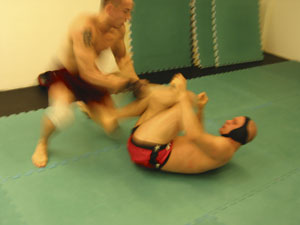 ‘High volume’ training consists of long training sessions, usually at low to medium intensity. These workouts might include 10 km runs, 20 rounds of easy sparring, or hour-long grappling sessions with multiple partners. ‘High intensity’ workouts tend to be shorter, but involve greater effort and intensity: you go all out. Sprints, hill runs, all-out rounds on the Thai Pads, and anaerobic training are high intensity workouts.
Workouts that are both high intensity and high volume (Ironman workouts) are very draining for an athlete and can take a long time to recover from. They should be used sparingly in general training, and not at all close to competition. The benefits gained from such Ironman sessions are negated when there is insufficient time for recovery and supercompensation to occur. Workouts only make you fitter if there is time to recover from them.
Periodization divides a training program into stages. The first stage(s) early in the program place emphasis on acquisition of new skills and general fitness. Typical workouts are long (high volume) but easy (low intensity), and they prepare the mind and body for the harder training to come. Cardio training should be emphasized at this stage, because it is impossible to build a superior anaerobic system on an inferior aerobic system. Typically this stage lasts from 1 to 4 months, depending on the athlete’s starting level and the time available before competition.
In the next stage(s) training intensity is increased, with an emphasis on skill refinement (rather than learning new techniques). The athlete and his coach will usually try to polish the athlete’s game, as well as increasing his anaerobic fitness. Sparring is more intense and conditioning includes more sprint work, although there is usually still some aerobic conditioning component. This stage is sometimes broken up into two or more phases, depending on the time available and the needs of the athlete in question.
Finally comes the process of peaking and tapering, during which the volume of training is greatly reduced. This stage allows supercompensation to occur, and usually takes 1 to 2 weeks. Tapering will be discussed at length at the end of this article.
It must be remembered that the goal of periodization is to produce a fresh, rested, uninjured athlete while avoiding overtraining. For more information there are many books available, discussing periodization with regards to sports as diverse as running, weightlifting, sprint kayaking and Greco-roman wrestling. The principles and approaches in these books are, for the most part, still applicable to MMA training.
Recovery
| “I seldom run hard in training leading up to a big race. There is little point in leaving my best work on the training track.” – John Walker, the first man to run a 3:50 min mile |
Improving in a sport is a fine balance between the demands of training and the athlete’s ability to recover from training. Accordingly, anything that can increase the amount or rate of recovery is very important for the ultimate athlete.
There are few sports that require as many different motor skills as MMA competition. An athlete in this sport must know how to kickbox, how to wrestle, how to apply and avoid submissions. Physically he needs to be strong, explosive, agile, flexible, and have excellent aerobic, anaerobic and muscular endurance. These requirements make the ultimate athlete VERY susceptible to overtraining. There is the temptation to do a full kickboxing workout, a full wrestling workout and a full Jiu-jitsu workout every day, just to “cover all the bases”. Given the large workload required, it is evident is that one’s training must be highly specialized and avoid energy expenditures that are not strictly necessary.
The need to conserve energy and be smart in one’s training is especially paramount in the last month or two before an important competition. The athlete will be training very hard and is probably right on the verge of overtraining. Therefore someone preparing for the Abu Dhabi submission grappling championship should avoid boxing and kickboxing: he won’t be needing those skills on the mat. Similarly someone preparing for NHB should avoid gi-based grappling, fancy half-guard turnovers, or other activities that might be fun, but not directly related to his goal. Training in non-essential skills while preparing for a competition is just a drain of energy and impedes recovery.
Travel can be very difficult on the body and can contribute to overtraining. On average it takes one day per time zone crossed to recover from the effects of jet lag. If the athlete is training very vigorously while jet lagged he can very easily become overtrained, typically getting sick with a cough or a cold. Minimization of travel, and pampering oneself if one does travel during hard training and competition, seems to be a sensible thing to do.
Sleep is critical to recovery. Current research shows that the old standard of 8 hours per night is probably insufficient for maximal performance for most people, leave alone exhausted athletes. Even small amounts of sleep deprivation have a strong negative effect on the immune system, and can lead to illnesses such as colds and flus. An athlete in hard training probably needs 10 hours, not 8 hours, of sleep per night, possibly with an additional nap between workouts
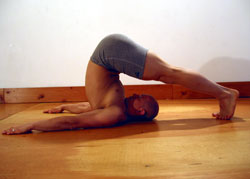 Yoga and massage are two therapeutic methods that can greatly speed up an athlete’s recovery process. These activities are beneficial to the athlete’s physical body, and can help him recover faster from minor aches, pains and strains. They are also calming to the mind and endocrine system, and will make relaxation and sleep easier to achieve.
Proper nutrition and hydration are very important. While perfect nutrition may not be able to prevent overtraining, less-than-perfect nutrition is very difficult on the body. An athlete already at his physical limit needs all the help he can get, and staying hydrated and eating well are absolute requirements to his well-being.
Age is another often-overlooked factor. The older athlete can train just as hard a younger athlete; it just takes longer to recover. This makes the whole art and science of tapering critically important for the ‘older’ (i.e. thirty and up), natural (non-steroidal) athlete. The older athlete wins competitions on the basis of years and even decades of training, combined with a sensible tapering schedule.
Tapering and Peaking
| “It is now widely accepted that a properly designed taper should be an integral part of any endurance athlete’s preparation for a major competitive event. Many coaches approach the taper period with some trepidation, as they try to hit the right balance of training and recovery” – John Hawley, Director of the High Performance Laboratory, Sports Science Institute of South Africa |
A correctly planned and executed tapering schedule is the one of the most important components of your entire training plan. Tapering allows your body to heal, your energy levels to be restored, and supercompensation to occur. At the end of a taper you will have peaked and should be raring to compete. Most athletes don’t taper long enough or scientifically enough.
John Hawley (Director of the High Performance Laboratory in South Africa) has isolated 3 critical factors for tapering schedules, applicable to all sorts of sports. These principles are
- Training VOLUME (not intensity) is reduced starting 10 to 14 days before an event. Virtually no work is performed in the last 2 to 3 days before an event to ensure that the athlete is fully recovered and ready to perform
- Training INTENSITY should be maintained, or even increased. Low volume but high intensity tapering schedules, with very low weekly mileages, have been proven their worth in middle distance, cross country running
- Training sessions should be reduced by approximately one third during a taper but no more as the athlete may start to feel stale.
In most sports and for most athletes, a tapering period lasts 9 days to 2 weeks. Some sports, Olympic swimming and marathoning, for example, may use tapering periods of up to three weeks. Training volume (ie total time spent training) is gradually reduced over this period, but training intensity is maintained. Short and intense sessions are sufficient to maintain fitness and allow for additional recovery.
Weight training should be discontinued during the tapering period. No significant strength will be lost over 2 weeks, especially when functional strength best maintained by sparring live opponents anyhow! Furthermore, heavy lifting can actually be detrimental too close to competition. It simply takes too long to recover from this intensely draining activity, and significant adaptation to the training stress will not have occurred by competition time. The taper period before a competition is not the time to be further stressing the athlete’s system with weightlifting of any kind.
The last week of a professional taper is always quite easy, especially compared to the high volume of earlier training. The last three days are usually reserved for resting, possibly with an easy technical session on one of those days. The day before the athlete should basically do nothing: if he absolutely must do something then he should rehearse the warmup he will use on the day of the actual event.
Peaking
| “The single biggest mistake lifters make in preparing for a competition is to place too much emphasis on performance immediately before a competition” – Arthur Drechsler, author of The Weightlifting Encyclopedia |
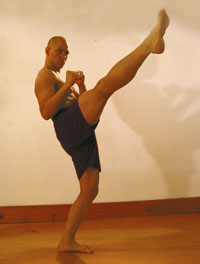
The goal of training and tapering is to peak in time for your competition. If you are overtrained then you will not peak successfully. Tom Osler in his book Conditioning of Distance Runners says “There are definite symptoms which the athlete can detect within himself when the attempt at peaking is progressing successfully. These include
- an increase in competitive drive
- a great eagerness to race
- general feeling of alertness and a desire to do things
- increased sexual drive
“…when these symptoms are not observed, it is likely that the attempt at peaking will be unsuccessful”.
If your training and tapering has been carefully thought out and adhered to, a couple of days before your competition you should be full of energy and anticipation. You will be ready to step onto the mat, or into the ring, and put performance to the best of your ability!
Click here to read the first article in this series about Overtraining in MMA and BJJ.