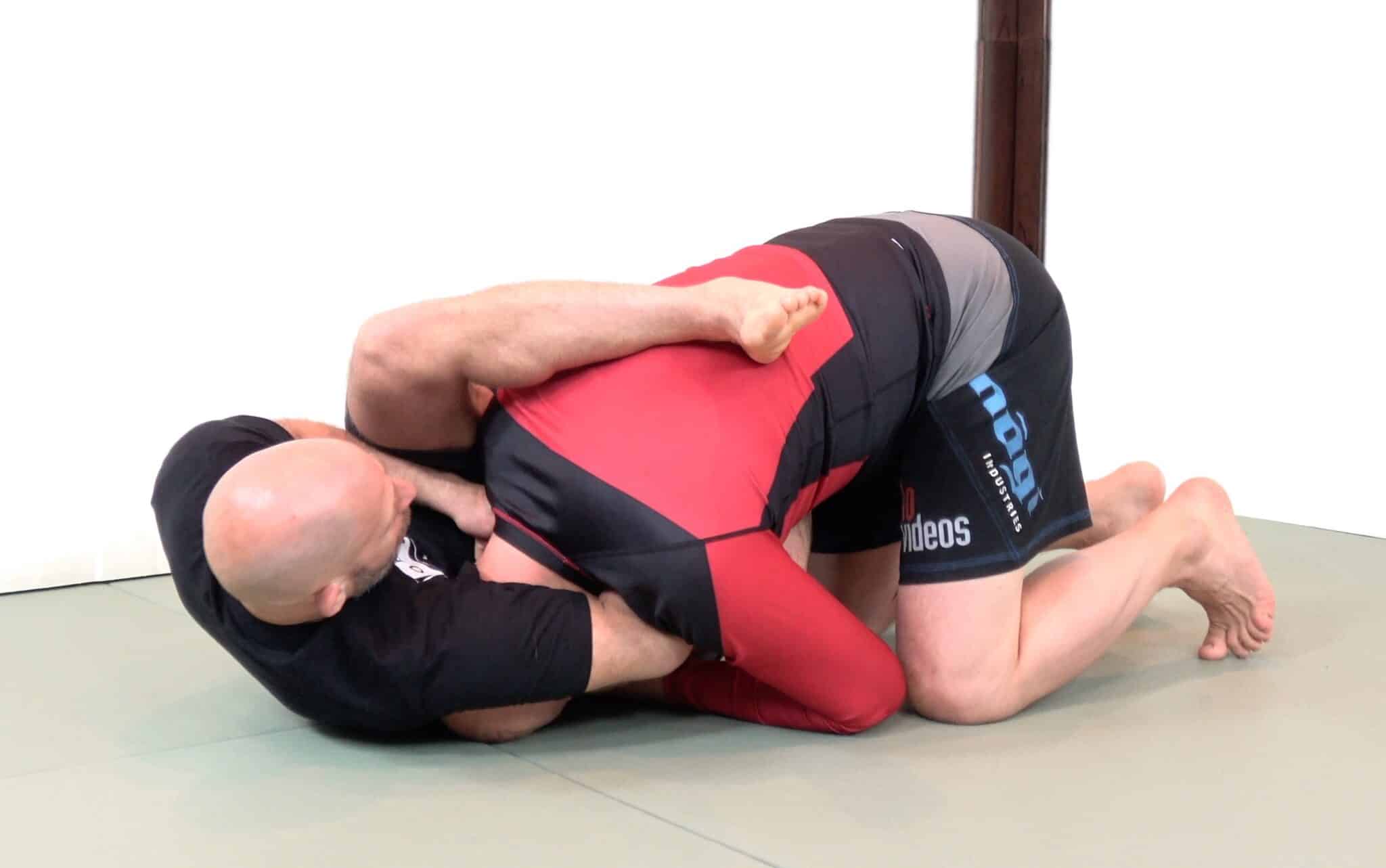


I recently posted a video about the high-elbow vs. high-wrist guillotine chokes.
Someone commented that they’d learned the guillotine but could almost never land it in sparring.
It’s always difficult to diagnose things remotely when you can’t see or feel what a person is actually doing, but I have a pretty good idea of what they were doing wrong.
You see, unless you’re going against a beginner, your opponent probably isn’t going to stick his neck out for you for very long.
This means that you have two choices…
Approach 1: React to transient opportunities
It’s totally possible hit the guillotine in those brief moments of opportunity during scrambles.
Learn to hit the guillotine when your opponent shoots in for a double leg… tries to come to his knees from half guard… momentarily exposes his neck while gripfighting from the butterfly guard… and so on.
Those are valid moments to attack, but the problem is that you need to be ready to jump on the opportunity at a moment’s notice.
You’ll need killer reflexes to take advantage of these transient openings.
But there is a better approach, less dependent on being blessed with the reaction time of an NHL goalie.
Approach 2: Create the opportunities.
How easy would it be for you to sink a guillotine choke on me if I told you that in 3 seconds I’d stick my neck out.
Just to help you, we’d count down together, 3, 2, 1, BOOM!
I’m guessing you’d slam that choke on and then I’d be in a LOT of trouble, even if you were smaller, weaker, and less experienced than me.
Anyone can have god-tier timing if they know in advance what their opponent is going to do.
If you force your opponent to move in a certain direction AND are waiting for his reaction, then being able to sink in your guillotine choke is much easier.
So if your opponent is turtled, don’t go for the guillotine right off the bat. Instead, first try to offbalance him with a turnover, and make it a sincere effort.
If the turnover works, then great – you’ve just pinned him. But if it doesn’t work, then it’s quite likely that he’ll expose either his neck for your guillotine or his hip area for you to get your hooks in.
Similarly, if you’re wrestling on your feet, then really try to snap him down to the ground or throw him with an uchi mata.
Either the take down will work, or he’ll be out of position at a predictable time, and now you can jump on the choke.
One more example: if you’re using your guard, then really try to sweep your opponent first. This would not be a fake; it has to be a real attack.
Again, either the sweep will work or you might get a golden opportunity to latch onto his neck.
As you’re probably beginning to suspect right now, this approach to getting more submissions DOESN’T just apply to the guillotine choke.
In fact, this is a universal principle. Offbalance your opponent and break his alignment before you attack.
This concept comes from Judo and is called kuzushi.
Studying kuzushi is the least sexy topic ever, which is why almost everyone neglects it. But I’m telling you that working on this aspect of your game will pay huge dividends. More sweeps and more submissions for you.
Furthermore, you’ll be able to land those chokes and armlocks against higher quality opponents; those kind of grapplers usually don’t break their own alignment for very long, but they can definitely be put out of position and submitted if you’ve got a strong kuzushi game.
So give some thought as to how to break your opponent’s alignment before you attack them with a submission.
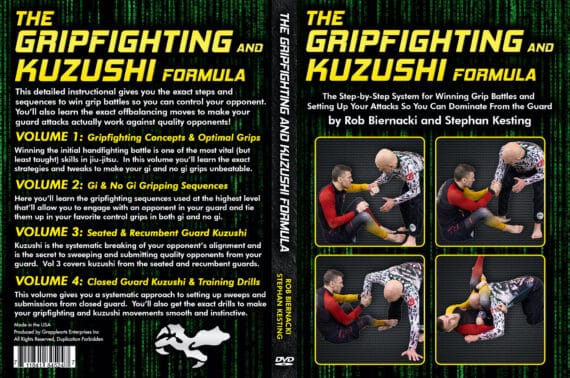
And if you’d like some help with this then check out the excellent instructional that Rob Biernacki and I did on this exact topic called the Gripfighting and Kuzushi Formula.
(Don’t tell your training partners about this instructional – you wouldn’t want them to use this technology against you, would you now?)
Cheers,
Stephan Kesting