

Murphy’s Law says that anything that can go wrong will go wrong.
Which is why you need both backup plans and redundant functions.
That way, when things go to hell, you’re not out of options. Plan A might fail, but you’ve got Plan B in the wings.
This is why the best techniques can serve two functions.
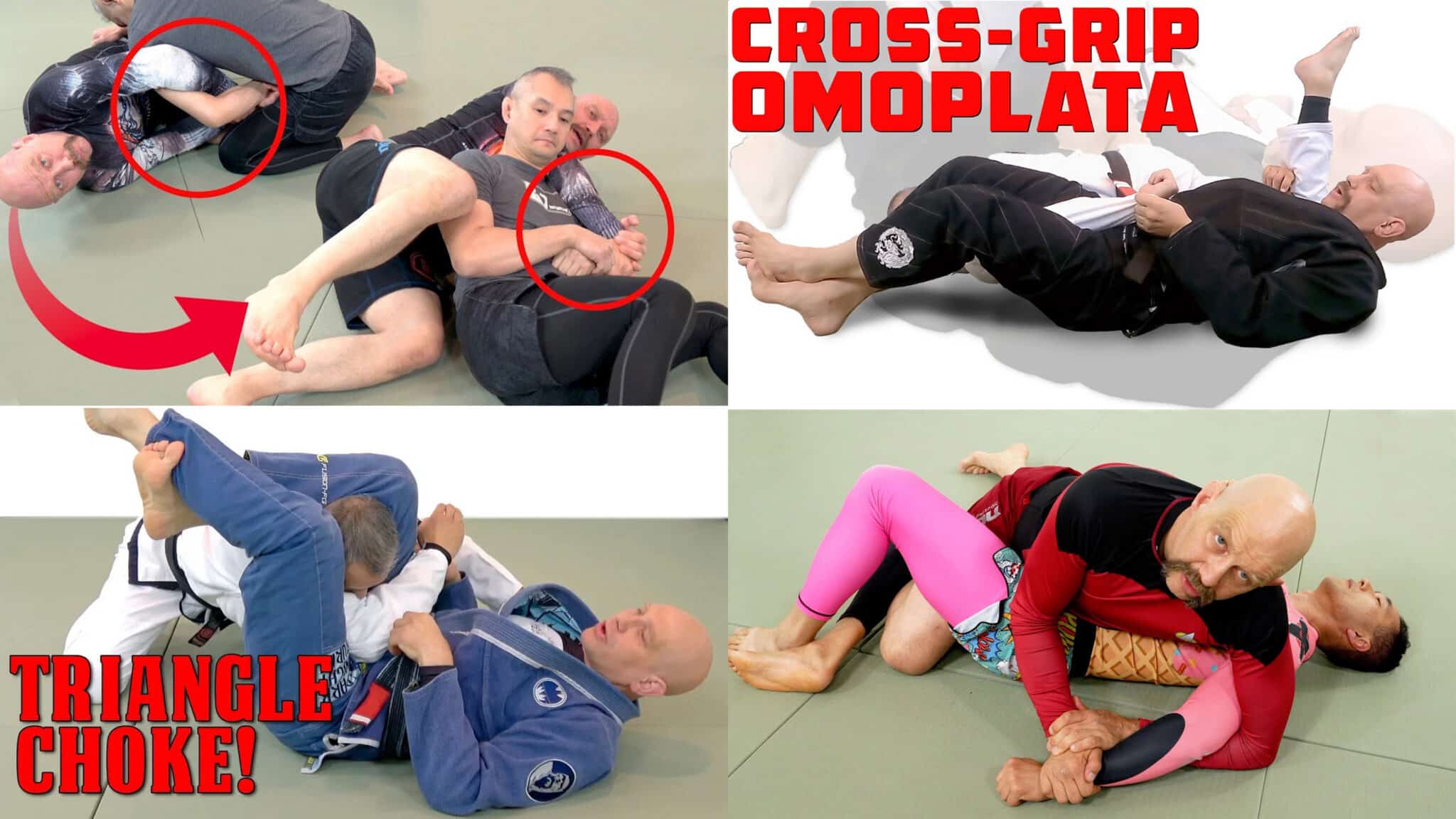
For example, the omoplata is a shoulder lock submission, but it’s ALSO a powerful sweeping position.
Essentially, the omoplata compromises their alignment so much that even if you can’t get them to tap out, they’re still vulnerable to getting swept forwards… or backwards… or right over top of you.
Similarly, the Kimura is a powerful submission, but it’s ALSO a controlling position that sets you up to significantly improve your positional game.
For example, high-level players will often use the Kimura to take the back. Here’s just one fancy example of that but there are many more…
A good Kimura player will also use this technique to pass the guard.
Submissions can do double duty as sweeps and transition-enablers, but sweeps can also set up submissions.
A sweep can also be a kuzushi (offbalancing) that disrupts your opponent’s base, posture or structure. An example of this is my favourite triangle choke setup…
Anyway, the point is to not get fixated on one specific outcome.
Yes, go for the submission, but be prepared for it to turn into a sweep.
Yes, go for the sweep, but be prepared for it to turn into a submission.
Either you end the match, or you put your opponent on the defensive and waste their energy. Both are good outcomes!