


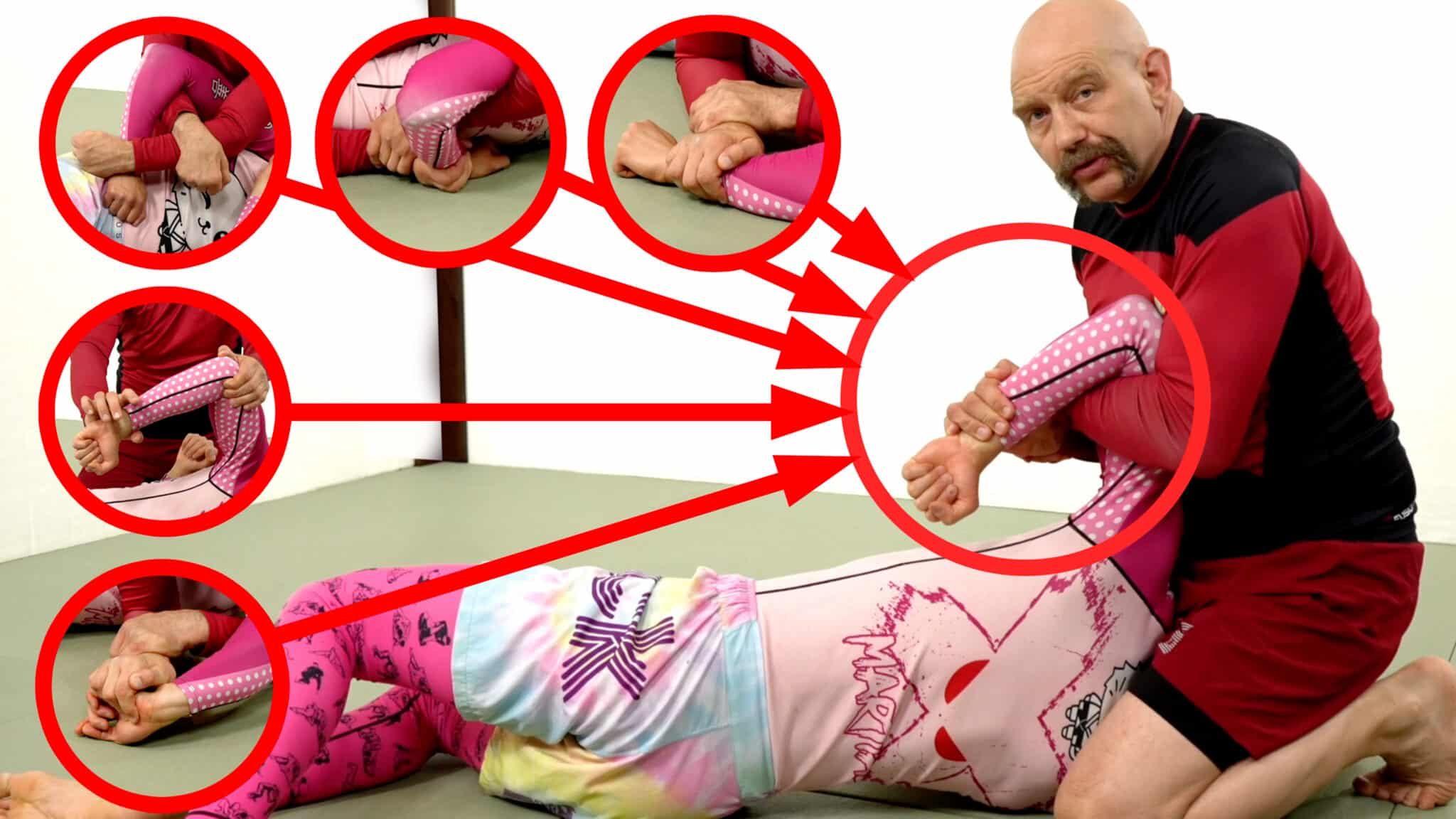


There are many different ways to grip the arm in the Kimura position, including the Judo chop grip, power grip, reverse grip, double fist grip, and more.
That being said, at a high level there are two grips that are used more than any other.
These two grips are broken down in this video here…
The first is the standard Kimura grip, also known as the far grip or the framing grip…
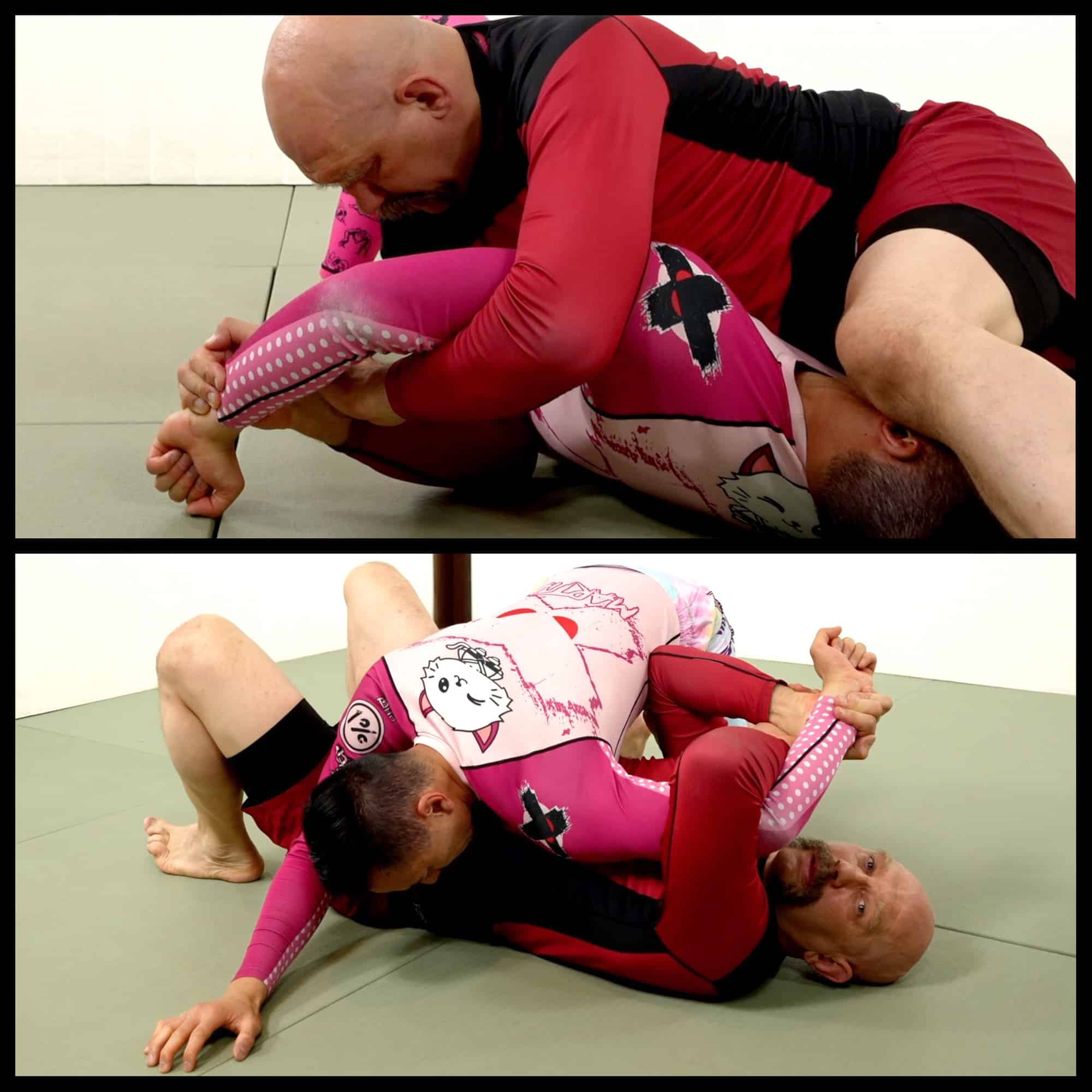
This is the style of Kimura grip that is most commonly taught in BJJ.
Your bottom arm – the arm that controls your opponent’s wrist – forms a frame between his arm and his body.
This prevents your opponent from bringing his hand in towards his body and making a defensive grip (especially important in the gi).
Finishing this uses a large rotational action primarily; very roughly, your opponent’s elbow stays in the center of the clock and his hand is rotated forwards or backwards around the edge of the clock.
The second grip is less well known but very, very powerful. This is the near grip or the waiter grip….
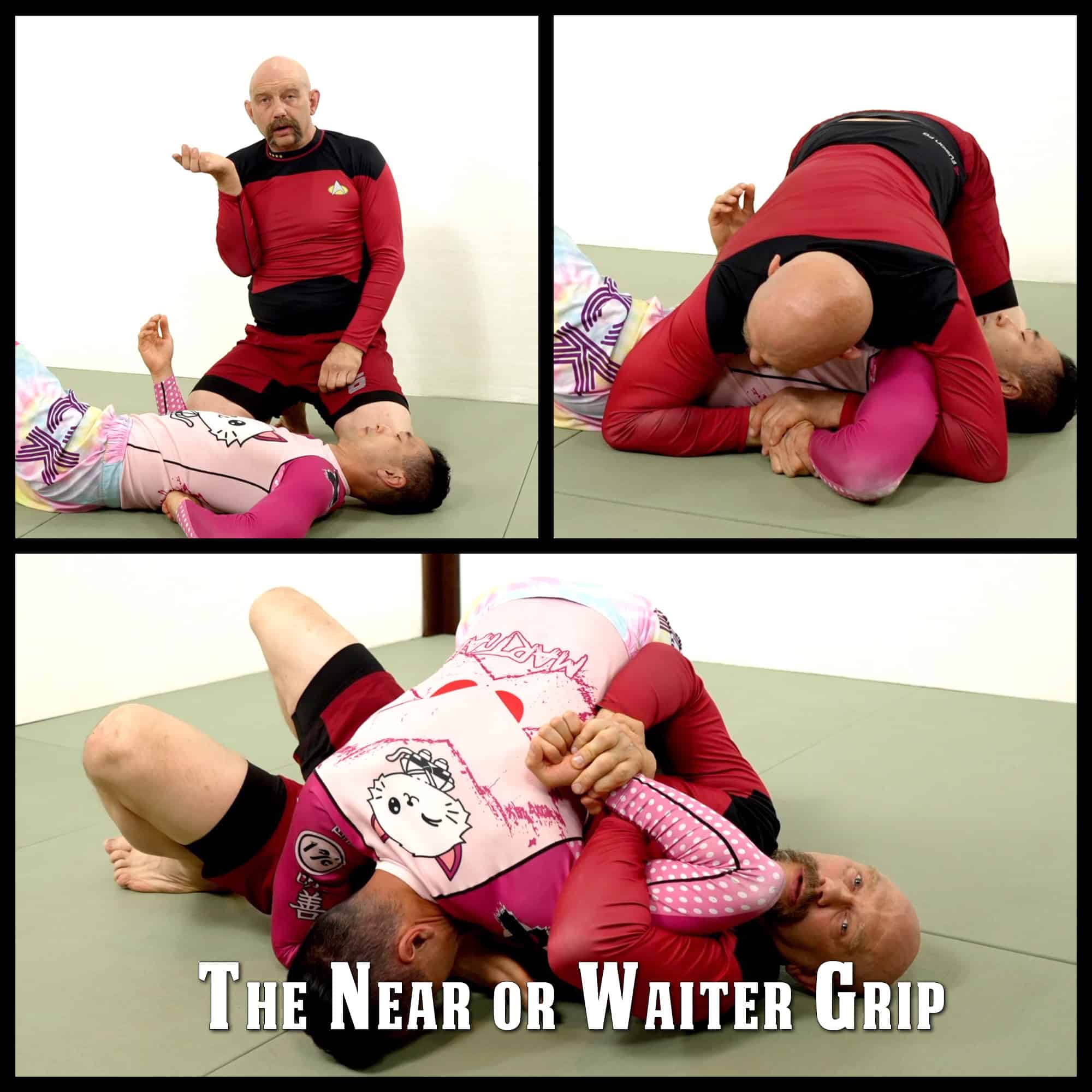
In this grip you bring the forearm of your bottom arm (the one that’s gripping his wrist) tight alongside his body. Typically, your elbow will be in his hip.
This brings his arm in towards his body, enabling a slightly different finishing mechanism.
To finish, you’ll use mostly a pushing motion, similar to how a waiter carrying a heavy tray of food would push up.
I don’t know for sure where this Kimura style came from, but my friend Oz Austwick was taught this method by Billy Robinson, a catchwrestling legend, so maybe that’s the source.
Regardless, it’s becoming more popular on the mat these days, especially in no gi scenarios where you don’t have to worry about your opponent grabbing his gi or his belt to defend as much.
If you want more about this topic and you already own The Roadmap for the Kimura check out lessons 6 and 7 in Section 1, Understanding the Kimura.
Finally, remember that the Kimura is control position first and a submission second. Even if you never finish a single Kimura in your whole life doesn’t mean you can’t use it to take the back, stop the guard pass, or reset dominant positions.
A Checklist of Kimura Positions
We discussed using the Kimura as a positional tool, and that implies you need to know which positions you can use it in. That’s why I put together a resource to break down the core positions you need to know to get good at this king of armlocks.
Click here to download my guide to the 12 major Kimura positions for FREE, including the major attacks and submissions from each.
The Kimura Roadmap
Check out The Kimura Roadmap, my positional approach to mastering the Kimura and tapping out more training partners and competition opponents.
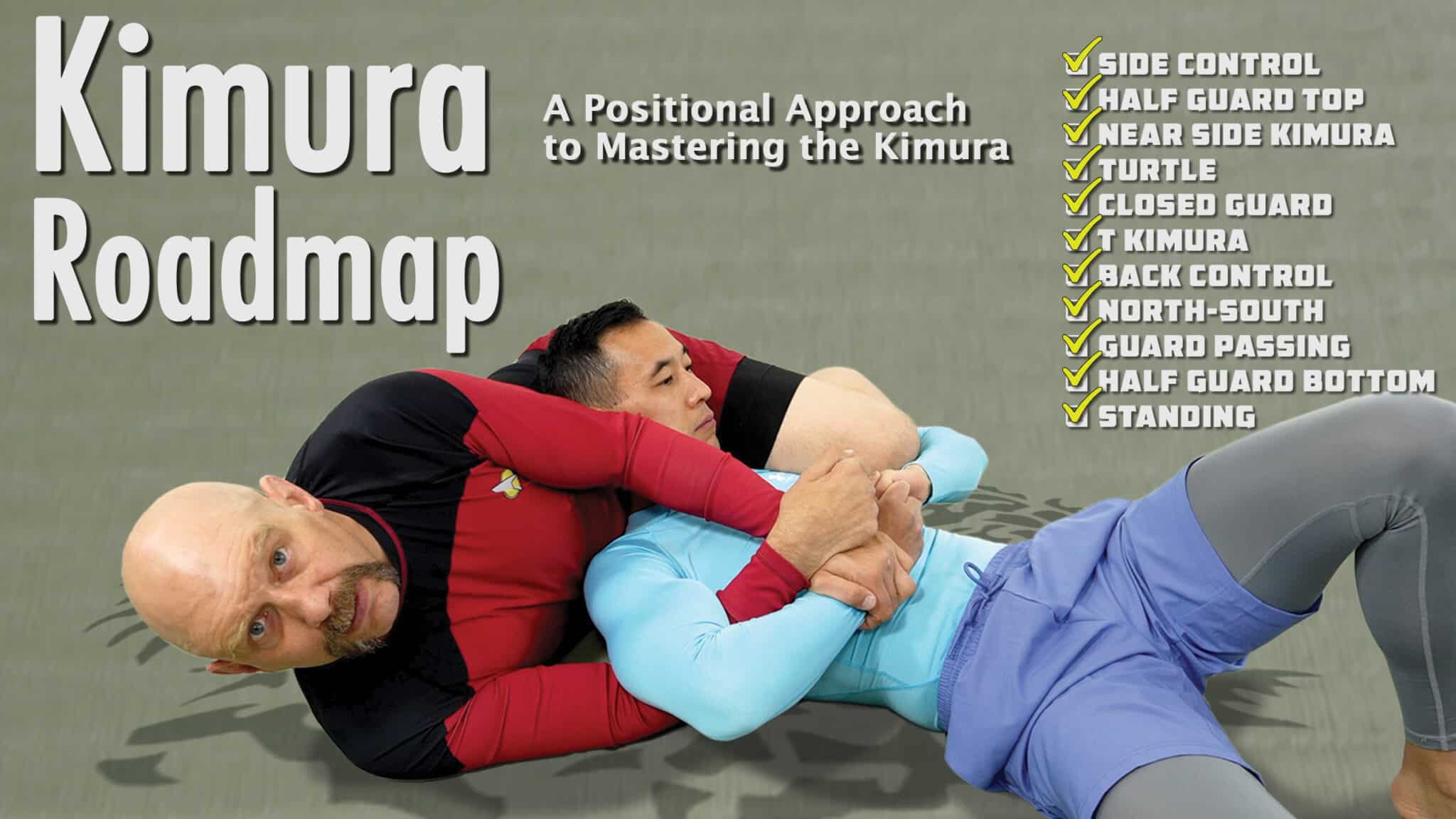
Click here for more information about the best-selling Kimura Roadmap