
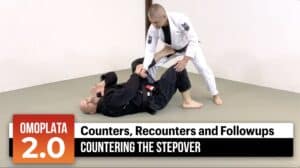
The omoplata has been one of my favorite submissions since I started training BJJ in the early 1990s. But like any submission your opponent won't just go gentle into that good night; it's an absolute certainty that he is going to try to escape your attack. And one of the most common counters is your opponent stepping over your head to get to the far side of your body and freedom when you're … [Read more...]
BJJ Techniques and Articles
Welcome to the Grapplearts Blog. Here you can check out black belt Stephan Kesting’s BJJ techniques, tips and articles for jiu-jitsu training and high level performance
How to Make Better MMA Fighters, with Ian Harris from Fight Science

Ian has more than 40 years of martial arts experience and has been working with MMA fighters for more than 20 years. Today we discuss the changes that need to be made in jiu-jitsu training for it to be effective in a real fight, how to create a fight gameplan (and how to get a fighter to follow it), cutting weight intelligently, the best conditioning for a gas tank that never runs dry, and why … [Read more...]
Climbing the Jiu-Jitsu Mountain
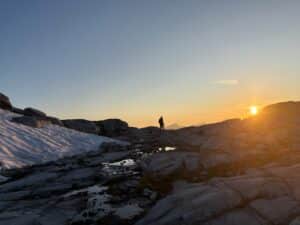
Learning jiu-jitsu is a bit like climbing up a mountain. You start at a trailhead and start working your way up the slope. As you first slog away you're heading through the forest. It’s a lot of effort but relatively little reward; all you can see is trees, trees, and more trees. Huffing and sweating, you keep on going up up up. Finally the trees part and you emerge at the first viewpoint. … [Read more...]
How to Set Up the Guillotine Choke
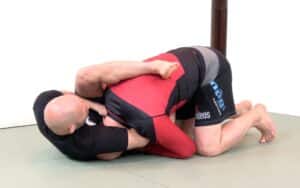
I recently posted a video about the high-elbow vs. high-wrist guillotine chokes. Someone commented that they’d learned the guillotine but could almost never land it in sparring. It’s always difficult to diagnose things remotely when you can’t see or feel what a person is actually doing, but I have a pretty good idea of what they were doing … [Read more...]
What Limbs Do I Have Left (a BJJ Concept)
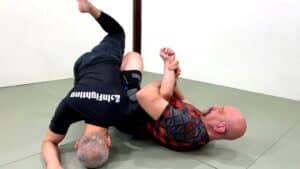
There's a concept I've been using in my own training for a long time; I call it "What limbs do I have left?" In jiu-jitsu, you have 5 limbs (your arms, your legs, and your head) at your disposal. Anytime you reach an impasse in your rolling - whether you just can't finish an offensive technique or can't escape a bad position - ask yourself whether all your limbs are committed and, if not, … [Read more...]
What BJJ Can Learn from the Brutal Art of Catchwrestling
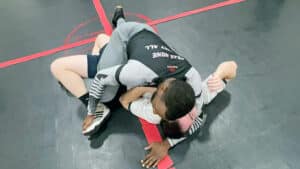
Catch wrestling was a brutal method for settling disputes on the American Frontier as well as one of the largest, most respected spectator sports prior to the modern era. Val Childs has been training in catchwrestling since he was 5, and in this episode takes us on a tour through the historical roots of catch, the modern catch competition circuit, and the training methods that can be adopted to … [Read more...]
Training as a BJJ Gypsy
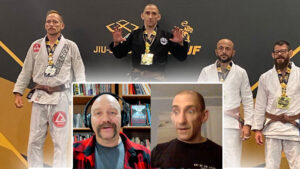
AOJ black belt Tom Wortman is a fierce competitor; he won IBJJ Pans, Euros, North Americans and Master Worlds in a single year as a brown belt. He's also a jiu-jitsu gypsy, typically training at a club for 3 to 6 months, then moving thousands of miles to see a new part of the country and training at a new club. Find out how he manages this nomadic lifestyle, what the red and green flags are for … [Read more...]
How Can a World Champion Suck So Bad?
I remember watching a BJJ black belt world champion trying to demonstrate a spider guard sweep and being appalled. His movement and his technique were barely blue belt level. How could this be?!?! This guy had tons of gold bling collected at the very highest levels of competition. Furthermore, he began most of his matches on the bottom, swept his way to the top, and then passed. The answer … [Read more...]
How to Pass Half Guard Using the Kimura

The Kimura is a powerful submission, but it's ALSO a giant handle. The really cool thing is that you can use that handle to move your opponent around OR move yourself around your opponent. In the video below I'll give you a fantastic example of using the Kimura as a handle to immobilise your opponent while you pass his guard. This is one of my very favorite Kimura setups... Important … [Read more...]
How Training Your Submissions as Positions Takes Your Game to the Next Level, with Steve Kwan from BJJ Mental Models
Today, Steve Kwan from BJJ Mental Models picks my brain about the benefits of training your submissions as positions first, and submissions second. I promise this will make perfect sense by the end of the episode, and may change how you approach your training. Episode 436 with Steve was a rare audio-only episode and is available on all audio podcast platforms, including Apple … [Read more...]
Roy Dean History of BJJ in North America

Renowned BJJ blackbelt Roy Dean came onto The Strenuous Life Podcast to talk about his research into how BJJ got started in North America, martial arts culture in Japan, the power of Judo in self defense situations, the importance of role models in shaping one's conception of masculinity and more. In addition to the video above you can also check out Episode 436 of The Strenuous Life … [Read more...]
High-Percentage BJJ Competition Strategies with Beatrice ‘Berimbozo’ Jin

Beatrice Jin shares the competition strategies that have allowed her to become the American National adult black belt middleweight champion and one of the top ranked black belts in the world. From guard pulls to sweeps to takedowns to pin escapes to conditioning to KO grips to structuring open mats so that they become a competitive advantage for you, Beatrice doesn't hold anything back. If … [Read more...]
These are the athletes I respect
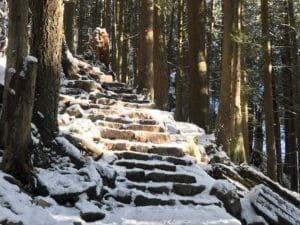
There's a mountain close to my home that I sometimes climb for cardio. I go on an established route known as the Grouse Grind with 800 meters (2,620 feet) of stairs. It’s a beast of a climb. Now there are elite cardio freaks who fly up this trail. The current record is 23 minutes and 48 seconds, set by a professional cyclist, which is nuts. But professional endurance athletes made of lungs … [Read more...]
Triangle Chokes from the Back, a User’s Guide

Being on someone's back is one of the most dominant positions in all of jiu-jitsu. This is for good reasons: all his weapons are facing away from you, he can't see what you're doing, and you're only half a second away from finishing him with the rear naked choke. One submission you're seeing more and more from the back is the triangle choke with the legs. This is showing up all over the place, … [Read more...]
Attack Strategies for the T Kimura

There is a very powerful position in jiu-jitsu called the T Kimura. If someone who knows what they're doing catches you with it, then you're in a world of trouble! In the T Kimura, you and your opponent form a large letter “T”. You’re on one side, lying behind his shoulders with his head on your belly, and controlling one of his arms with the Kimura. The trouble is that many people have … [Read more...]
No Gi and No Grips Guard Pass vs Headquarters

Guard passing is always tricky. Most guard passes require you to get grips with your hands, but if you're reaching for your opponent then there's always the chance that he can tie up your arms and take you over. This weekend I just put up a video I shot with Erin Herle on a style of guard passing that uses from the headquarters guard passing position where you use your legs, chest and … [Read more...]
On Standing Up to Bullies

I was 16 when I first became disillusioned with one of my martial arts teachers. Not because of something he did, but because of something he didn't do. At the time I was deep into Kung Fu training. Legs shaking in low horse stances, punishing the air with punches, hopping around like a monkey, pouncing like a tiger, pecking like a crane. (At the time everyone knew that Kung fu was the … [Read more...]
Growing Self Confidence with BJJ

Alicia Reitz and I dive deep into how BJJ can be used to develop a strong sense of self confidence for everyone, and how that self confidence can then be put to good use in self defense and the the rest of your life. We also digress a little into specifics of the social media drama that I was involved in recently, which certainly raised my blood pressure just a little. You can also catch … [Read more...]
Five Techniques to Counter the Kimura
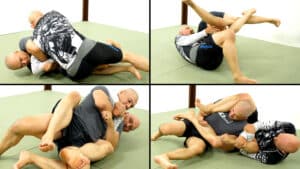
Countering the Kimura The Kimura is one of the most powerful submissions in BJJ, and having your arm cranked by one can lead to serious injury if you don't tap out in time. Therefore you need some Kimura defenses you can rely on. Here are five of my favorite Kimura escapes. Not only do these techniques get you get out of danger, in the course of the escape they ALSO teleport you to your … [Read more...]
The Fastest Way to Boost Your BJJ Cardio
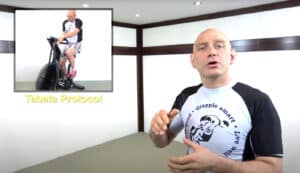
Years ago a big name MMA coach told me that Tabata sprints were mandatory for all his fighters. He argued that this particular exercise acted like a tank of nitrous in a street car; it gave his fighters the ability to generate an extra burst of speed and power when they need it most. In an MMA context this might be a wild flurry of sprawls and punches. In grappling it might be a desperate … [Read more...]
Hybrid Training with James Deirmendjian: Strength and Conditioning for BJJ

James Deirmendjian a strength and conditioning coach specialising in combat and tactical athletes who ALSO competes in BJJ, fighting against much younger opponents. As such he was the perfect choice to finish our 4-part series on hybrid training and the science of developing strength and endurance at the same time. In this episode James and I touch on many topics, including… - The most … [Read more...]
How to Fix Your BJJ Armdrag
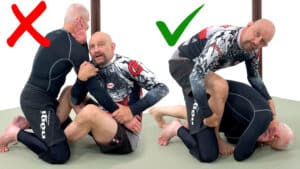
After Marcelo Garcia arm-dragged his way to ADCC glory back in 2003 the arm drag became one of the most powerful attacks from the guard in BJJ overnight. The arm drag is so successful nowadays at every level of competition that I'd go so far as to say it's a mandatory technique, especially if you train without the gi sometimes. A well-executed armdrag from the guard teleports you directly … [Read more...]
Hybrid Training with James Pieratt: How to Mix Marathon and Strength Training
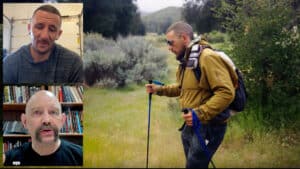
James Pieratt from Wild Hunt Conditioning first came to the public attention when he deadlifted 520 lbs and then immediately set out on a 50 mile ultramarathon. Today James joins us to share what he learned on an expedition in which he ran 802 miles through nearly the entire state of California. James is unique in the ultrarunning community because he also lifts heavy weights and trains in … [Read more...]
The 16 Most Important Techniques for the BJJ Beginner
What's the most common problem (aside from getting caught under side control) facing the BJJ beginner? It's probably feeling overwhelmed by the staggering number of techniques that Brazilian Jiu-Jitsu contains! There are a thousand variations of sweeps and locks and chokes and pins and escapes and guard passes. It's enough to make your head spin! So where then do you start? Which … [Read more...]
Hybrid Training with Chris Duffin: The Science of Strength, Power and Endurance
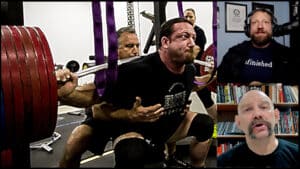
Episode 430 features Chris Duffin who has squatted AND deadlifted over 1000 lbs for reps, but has also done some genuinely insane things like deadlifting 405 lbs 60 times in 60 seconds, and squatted 800 lbs every day for an entire month. Given that he has achieved these amazing feats of strength-endurance, I thought he would be a great guest for the podcast in our series on hybrid … [Read more...]